RV Adventure Seekers
Welcome to
RV Adventure Seekers
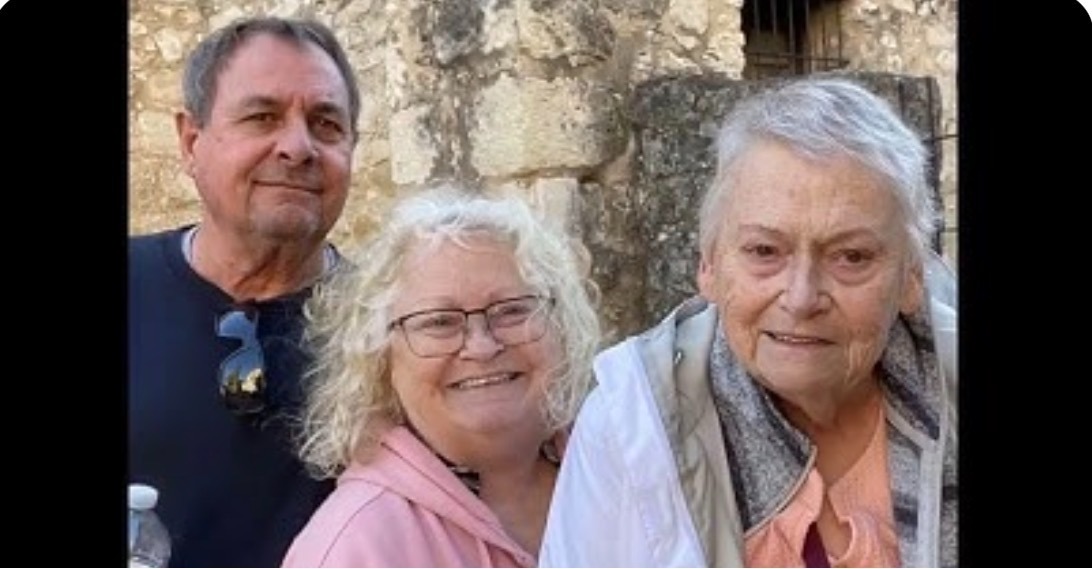
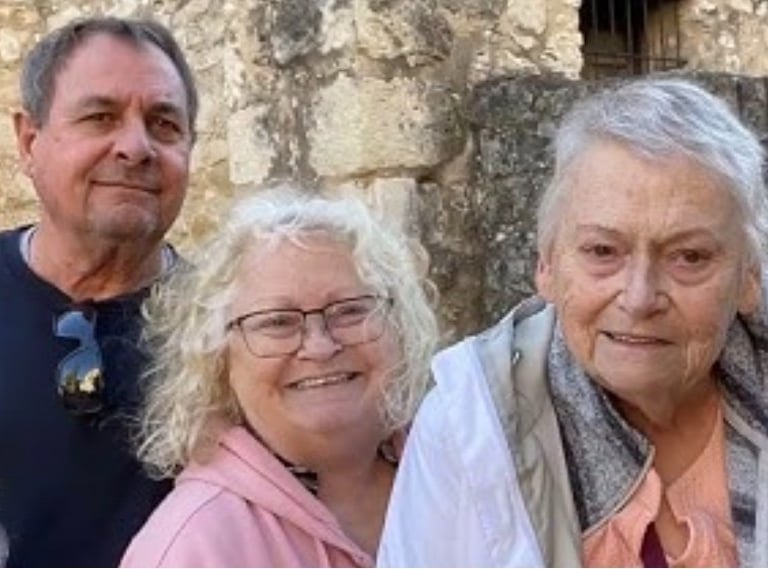
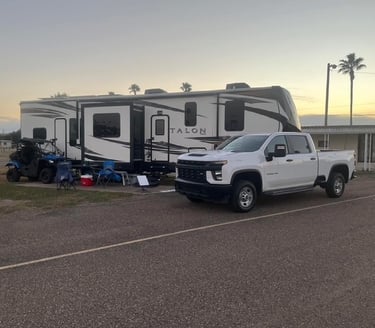
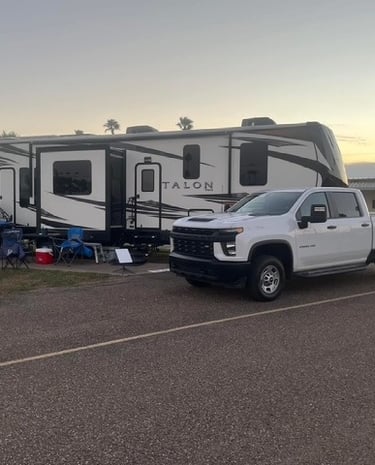
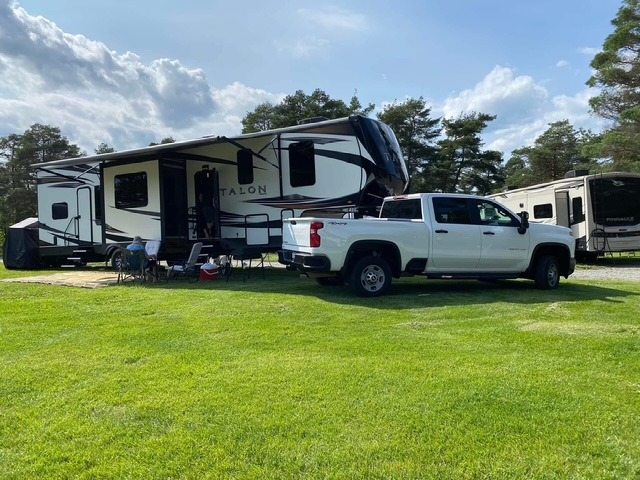
We're Lori, Kenny & Barb (aka The Traveling Grandma) — a family of full-time RVers rolling through America in our 2019 Jayco Talon Toyhauler 403T.

Our Journey
Sharing real RV adventures, tips, and heartfelt moments for anyone who loves the open road.
Full-Time RV Living Doesn't Have to Be Expensive
Our grand total for campsites in our first year of full-time RVing? Just $2,487. That’s an average of only $6.80 a night to travel the country for 365 days.
When we decided to live full time in our RV, we had one main goal: make it as inexpensive as possible. But honestly, heading into 2025, our very first full year, we had no idea if we could really spend less on parking our home than a single mortgage payment. We were shocked when we saw the final numbers.
In this video, we’re going to break down how we did it, completely by surprise. We’ll share the 68/32 boondocking-to-campground ratio that we stumbled into, and how this first year has us wondering if we can save even more in 2026. And stick around until the end, because we’ll also share our secret to getting our paid campground average down to just $21.44 a night.
The Big Picture - Our 2025 by the Numbers
Alright, let's jump into the numbers because they honestly blew us away. When we tallied everything up for our first full year, the final number was $2,487. Again, for 365 days. That averages out to a nightly cost of six dollars and eighty cents, which we still can’t quite believe.
To put that in perspective, a single night at a private RV park can easily run from $60 to over $120. Our total for the entire year was less than what many people pay for one month of rent or a mortgage. That comparison is what made us realize this lifestyle could actually work for us. We weren’t trying to be cheap; we were just trying to be smart with our money because we had to be.
Our whole approach ended up being a split between free and paid camping. Looking back, we see we developed a 68/32 split. Out of 365 nights, we spent 249 of them—that's 68% of our year—boondocking. For free.
The other 116 nights, or 32% of the year, were in paid campgrounds. Now, we'd love to say this was some master plan we had from the beginning, but the truth is, it's just the ratio we fell into while trying to balance saving money with the practical needs of RV life. And now that we see how it works, we’re going to show you exactly what we learned.
The 68% - Our Crash Course in Boondocking
For anyone new to the term, "boondocking" is just camping off-the-grid. No hookups for water, power, or sewer. You’re totally self-sufficient, relying on your RV’s own systems. And the best part? Most of the time, it’s completely free. Those 249 free nights were the single biggest reason our budget ended up being so low.
But we quickly discovered it’s about way more than saving money. Boondocking is where the real magic happens. It’s waking up to pronghorn outside your window in Arizona. It’s having a million-acre national forest as your backyard in Colorado or Utah. It's the deep, profound quiet of the desert at night. This is the freedom we were dreaming of when we started this journey.
So, where did we find these spots? We relied heavily on public lands. We spent tons of nights on Bureau of Land Management (BLM) land and in National Forests. These are lands that you, as a taxpayer, literally own. A common rule on BLM and Forest Service land is a 14-day stay limit, but the rules on how far you have to move can vary a lot, so we learned you always have to check locally.
We also figured out other kinds of free camping. For quick overnights, we’d sometimes stay at a Bass Pro Shop or a welcoming Travel Center, but we always asked for permission first.
We knew from our years of experience, that you can’t just roll into the wild. First, we had to get our rig ready. We took a chance and invested in a solar panel setup and upgraded to lithium batteries, hoping it would pay off. It was a total game-changer. For a standard RV, you might get three or four days before your batteries run low. With our solar, as long as we had sun, we could pretty much stay charged. And we saved money by having Kenny do the installation. And we also have our onboard generator as backup.
The next big thing is water. We have become masters of water conservation. We installed a low-flow showerhead, and we learned when we were young how to take super-quick "navy showers," and got creative with doing dishes. We’d fill our tank wherever we could—gas stations, rest stops, or during our paid stays—and then stretch that water as far as it would go.
The Other 32% - Our Paid Campground Strategy
If boondocking is so great and free, why did we spend 116 nights in paid campgrounds? We realized these paid stays were our scheduled "reset" days, and they were absolutely essential.
Life on the road, especially boondocking, creates chores we couldn’t always accomplish while boondocking. Your gray and black tanks get full, your fresh water runs out, and the laundry bag gets intimidating. Paid campgrounds became our pit stops. It was our chance to get full hookups, dump our tanks, and do a mountain of laundry. It's what made the whole lifestyle feel sustainable.
We also learned to use these stays strategically. We used them for places where boondocking was tough or impossible, like inside certain National Parks or in the middle of a city. Let’s just say that as RVers, finding a legal, free spot for a 42-foot RV in downtown St. Louis wasn't a challenge we were ready for. So, we’d book a few nights at a nearby RV park and use it as a home base.
But even with our paid stays, we were always hunting for a deal. Our 116 paid nights cost us $2,487 total, which is an average of just $21.44 per night. We were shocked. That’s way below the national average. We managed this by prioritizing state parks and other campgrounds, which are almost always cheaper than resorts.
Practical Tips for Your Own Budget Adventure
We couldn't have survived without a little help. The number one question we get is, "How in the world do you find these amazing free spots?" The answer for us was a couple of incredible apps on our phone.
Our go-to app is Roadtrippers with Campendium. These are community-driven, meaning fellow travelers share campsites with photos, reviews, and important details like cell service. Honestly, using these tools, we found more spots than we could ever visit.
Finding the spot is one thing, but we also learned how important it is to be a good steward of the land. Being able to camp for free on public land is a privilege, and it’s on all of us to be responsible. The golden rule we learned to live by is to follow Leave No Trace principles. Everything you pack in, you must pack out.
This also meant learning to be a good neighbor, even if they’re half a mile away. We learned to keep our generator use to a minimum, especially in the morning and evening. We use LED lights to save power and cut down on light pollution. And we always, always check for local fire restrictions before even thinking about a campfire. The goal we adopted was to leave these beautiful places looking like we were never even there.
The Full Budget Breakdown (What's NOT Included)
Okay, we want to be super clear about what this $2,487 budget includes and, more importantly, what it doesn't. When we were planning the year, I didn’t keep track of our complete budget. for us. We’ll do better in 2026 and provide a complete budget with food and gas etc.
So, this number is one hundred percent of our spending on campground fees—the cost of "renting" the ground we parked on.
It does not include the other big costs of RV life. This budget doesn't touch fuel, which was a huge and, frankly, scary expense for us. It doesn’t cover our RV and truck insurance, or health insurance. It doesn’t cover our groceries, our cell phone bills, entertainment, or the RV maintenance we inevitably had to do during the year.
We think it's really important to be upfront about this because seeing that low number can be misleading, and we remember how overwhelming it was to try and budget for everything. Affording full-time RV life is a puzzle with a lot of pieces, and campground fees are just one. Our goal here is just to show you how we accidentally made that one piece as small as possible.
Conclusion
So, there you have it. Our first year on the road, 365 days, and less than twenty-five hundred bucks on a place to stay. We proved to ourselves that this lifestyle wasn't as expensive or impossible as we feared. It’s for anyone willing to learn as they go and embrace a little adventure.
The 68/32 split we ended up with gave us the breathing room to actually enjoy the journey, without constantly stressing about the next campground bill. It showed us that boondocking could be a sustainable way to live.
Now, for the secret we promised at the beginning. The reason we got our paid campground rate down to only $21.44 a night is because we mostly stayed at Army Corps of Engineers and Forest Service Campgrounds. At these locations, we were able to use our America the Beautiful Senior Pass to save 50% on campground fees. That meant we were able to pay from $6.00 to $15.00 per night for a campsite.
That average of $6.80 a night was a total surprise to us—but it was a surprise that came from trying to balance freedom with practicality. Now that we've completed 2025, our big goal is to take what we learned and see if we can do even better in 2026.
We hope this breakdown of our first-year experience helps show that a year of incredible travel is more doable than you might think. It takes some planning, but also a willingness to figure things out along the way.
Now, we want to hear from you. We know budgets are a massive topic with a million questions. So, drop your biggest budget question in the comments below. Whether it’s about fuel, food, or something totally different, ask away. Your questions help us make better content for this awesome community.
Thanks for watching, stay safe, and we'll see you out there.

Join Lori and Kenny as they share the financial reality of their first year of full time rv living, revealing how they maintained a budget travel lifestyle. You won't believe their incredibly low campground fees, averaging just $6.80 a night, largely thanks to free camping and boondocking. This rv life journey proves that rv living can be incredibly affordable and full of amazing adventures. Subscribe and come along for the ride.
We Spent 2 Years in One RV—Here's What Actually Happens
We want to ask you something. When you picture full-time RV life — what do you see? Sunsets over the desert? Waking up to a mountain view? Coffee outside with nowhere to be? That's real. That exists. We have lived that version. But here's what they don't show you. They don't show you the travel day when the slide-out stops working three hours from your nextvcampsite. They don't show you the morning the water pump died overnight. They don't show you the math — because nobody wants to do the mathon camera. We've been camping our whole lives. Full-timing for two years. Three of us — me, my husband Kenny, and my mom Barb, who we call The Traveling Grandma. And today we're going to show you the real version. Not the highlight reel. The whole thing."
THE HONEYMOON PHASE WAS REAL
Here's what I need to say first — the honeymoon phase? It's real. And ours lasted a while. When we first hit the road, everything felt new. New campsite every week. New state, new scenery, new adventure. We were doing what most people only dream about. And we felt every bit of it. Hopefully, we will get that feeling back once we leave here and hit the road again. People ask us — do you ever regret it. Was there a moment you thought, we made a mistake? Honestly? No. But there were absolutely moments where we thought — this is harder than we expected. And those moments are worth talking about. Because the RV content you find online skips straight from 'we quit our jobs and hit the road' to 'here are our beautiful campsites.' The middle part — the real part — almost never gets shown. So that's what today is
REALITY #1 — THE MONEY
Let's start with money. Because this one surprises people the most. A lot of folks think full-time RV life is expensive. And it CAN be — if you're staying at full-hookup RV resort parks every night, paying fifty, sixty dollars and sometimes over a hundred dollars a night. That adds up fast. Our average camping cost last year was six dollars and eighty cents per night. Not a week. Per night. How? Boon-docking on BLM land. Gate guarding — which is actually where we are right now, in Texas, where we get a free campsite in exchange for monitoring a gate. We work every discount we can find. We actually spend LESS money on the road than we did in a house. When I tell people that, they think I'm exaggerating. I am not. Now — that doesn't mean it's free. There's fuel. There's maintenance. We have an RV payment and a truck payment. And oh, we will get to maintenance. But the baseline cost of just being somewhere? We have that dialed in. If you want the full breakdown on exactly how we hit that number — that video is linked here: https://youtu.be/NIpDT0bgGa8?si=YdW2rhEDQWkkbmq5
REALITY #2 — SOMETHING ALWAYS BREAKS
Now. The maintenance. I cannot prepare you for this. I don't care how handy you think you are. I don't care how many YouTube videos you watched before you hit the road. Something is always in the process of breaking, being fixed, or about to break. In the past year alone, we had — slide-out issues. Water pump. The solar system, which I’m Going to do a whole video on. We had to buy a new to us truck because we burnt up the one we had. Here's the thing about Kenny. He was a trained mechanic, but He is not an electrician or a plumber. He is a guy who decided he was going to figure things out because calling a shop every single time was not going to work for our budget. He built our entire solar system himself. Sixteen hundred watts of solar, eight hundred amp hours of lithium battery, an inverter charger. He taught himself every bit of it. Including the part where I bought a charge controller from China with absolutely zero instructions. That one took him a while. The real cost of full-time RV life isn't campsite fees. It's time. Time spent fixing, troubleshooting, learning. And sometimes — sitting in a muddy field in Texas waiting for the ground to dry out enough to do the next install. That's what they skip in the highlight reels.
REALITY #3 — STAYING BUSY ON A BUDGET
Here's the one nobody warned us about. And I think it surprises people more than anything else. The hardest part of full-time RV life is not the small space. It's not the gray water. It's not leveling the rig. It's finding enough to DO at each place — so that you actually want to stay long enough to hit your budget goals. Here's the math. If you're moving every two nights, you're burning fuel constantly. To keep our cost average down, we need to stay put. But staying put means you need things to do. Free things. Or close to free. We brought our Honda Pioneer specifically for this reason. We ride OHV trails. We explore. We find the free things in each area that most people drive right past. We keep a playlist — free things to do in every state. Because after two years of doing this, we've learned: the activity plan and the budget plan have to be the same plan. Otherwise, one of them fails. Stay tuned until the end — because the reason we'd never go back is connected directly to this. The activity plan IS the budget plan.
THE PART NOBODY TALKS ABOUT
I want to tell you something that doesn't make it into the highlight reels. This is the real reason we're out here. My mom and I both had breast cancer. At the same time. Mother and daughter, going through treatment together. And when you go through something like that — when you sit in a waiting room next to your mom, both of you in the same fight — you come out the other side with a very different relationship with time. With what matters. With waiting for someday to live your life. We did not want to wait anymore. So when we hit the road, it wasn't just an adventure. It was a decision. A very deliberate decision that life is short, and we were going to live it now — while we were healthy, while Mom was strong enough to have her own space in the back of the Talon, while we still could. That's what's underneath all of this. That's why, on the hard days — and there are hard days — we never once look at each other and say we should have stayed home. There's a version of full-time RV life where people do it because it's trendy. That's not our version.
WHAT THREE PEOPLE IN ONE RV ACTUALLY LOOKS LIKE
Now — I know what you're thinking. Three people. One RV. How does that actually work? We're in a 2019 Jayco Talon Toyhauler 403T. The Talon has a garage in the back — that's the toyhauler part. That's Barb's bedroom. Her space. Her domain. And I will tell you — it works better than you'd think. Mom has her room. We have ours. We're close enough to have dinner together, help each other out, be a family. But we each have enough room to breathe. The secret is the floorplan. Not every RV works for three people. But the toyhauler garage layout — that was the decision that made all of this possible. If you're thinking about full-timing with a multi-generational family, start with the floorplan. Everything else follows from there. And honestly — having Mom with us has been one of the best parts of this whole thing. She's seen more of this country in two years than most people see in a lifetime.
WHY WE'D NEVER GO BACK
So. Would we go back? Not a chance. And here's the thing — it's notthe sunsets. Those are real, but that's not it. It's not the freedom, even though that's real too. It's not even the money savings. It's this: we know ourselves better now. We know what we actually need to be happy, versus what we thought we needed. And those two lists are very different. We don't need a big house. We don't need a yard. We don't need a commute or a fixed address or a routine that looks exactly the same every single day. We need each other. We need movement. We need something to figure out. And out here, we always have all three. The hard days teach you that. A slideout that stops working three hours from your next site — that teaches you something. A solar controller with no instructions — that teaches you something. Cancer — your mom's, your own,choosing to live out loud anyway — that teaches you everything. We don't sugarcoat it. That's not how we operate. But we also wouldn't trade it. That's the honest truth.
CLOSE
If you're thinking about full-time RV life — or if you're already out here and nodding along to every word I just said — drop a comment below. Tell us the thing nobody warned you about before you hit the road. Or if you're still planning, tell us your biggest fear. We read everything. The full camping cost breakdown — how we hit six eighty a night — is linked above.
We're Lori, Kenny, and The Traveling Grandma. The RV Adventure Seekers And remember- Life is Good. We'll see you in the next one.

Two years. Three people. One RV. And an average camping cost of $6.80/night. This is our honest take on full-time RV life after the honeymoon phase wears off — the real challenges, the real wins, and the real reason we'd never go back. When you picture full-time RV living, do you only see sunsets? We show you the real rv life, including the challenges of rv travel. This video highlights the financial reality of living on the road and unexpected rv problems like a malfunctioning slide-out or water pump issues. We share what rv maintenance really looks like, ensuring you get the full picture. We're Lori, Kenny & Barb (The Traveling Grandma) — a mother-daughter duo who both survived breast cancer and decided they were done waiting for someday. Full-time in our 2019 Jayco Talon Toyhauler 403T. We don't sugarcoat it.
We Both Got Breast Cancer at the Same Time (Full Mother & Daughter Diagnosis Story)
Mom's Breast cancer saved my life. I was three years overdue for a mammogram — and I almost didn't go. Last year, my Mom and I were both diagnosed with breast cancer at the same time. We live full-time in our RV. No house. No home base. Just us, our Jayco Talon Toyhauler, and the road. This is our full story. In this video we're sharing everything we kept mostly private — Mom's second cancer diagnosis, my unexpected diagnosis, two bilateral mastectomies, radiation, recovery in our RV, and the incredible family who held us together through all of it. We don't sugarcoat it. This is exactly how it happened. If you are putting off your mammogram — please watch this first.

I was three years overdue for a mammogram. Three years. And I had absolutely no intention of getting one done. That decision almost cost me my life.
Last fall, Mom and I were both diagnosed with breast cancer. At the same time. No house. No home base. No permanent address. Just us — living full-time in our RV — both facing bilateral mastectomies. And the only reason I found out I had it at all — is because of her."
We've shared moments of this along the way. But we've never sat down and told the whole story from the beginning — until now. So let me take you back to how this all started. Because it did not start with me. It started with Mom. Mom — Barb, The Traveling Grandma, for anyone who's new here — she found out she had breast cancer for the second time in April of 2025. She and her doctors decided to see if medication would stop the cancer. We drove back for her results in September. And she was going to need a mastectomy. And when you get news like that, everything just stops. The whole plan — the trips, the gate guarding, the next campsite — all of it stops. We had a decision to make. Where do you go? Who do you trust with something this serious? She chose Cincinnati, Ohio. And honestly? That decision changed my life. Literally. Now, here's something most people don't think about when something like this happens. When you live in a house and a health crisis hits — you stay home. You have your doctors. Your pharmacy. Your neighborhood. Your routine. We don't have any of that. When Mom got her diagnosis, we were on the road. The Jayco Talon is our home. There's no house to go back to, no local doctor who knows our history, no neighbor who can bring over a casserole. You figure it out on the road. You always figure it out on the road. That's just RV life — except this time, the stakes were a lot higher than a broken water pump. So Cincinnati, Ohio is where everything changed."
"What none of us knew — what I had no idea — is that going to Cincinnati for Mom was going to save MY life. Stay with us. Because this next part — I still can't fully believe it happened."
THE UNEXPECTED DISCOVERY
"So we're in Cincinnati. Mom is going through her appointments, her pre-op, all of it. And we're right there with her every step of the way. And someone — I think it was my sister —Benita, asked me, 'Have you had your mammogram done recently?' I hadn't. I was three years overdue. Now here's the honest truth. I was not in a hurry. My doctor — my primary care, everything — was back in Myrtle Beach, South Carolina. I wasn't in Cincinnati for me. Getting a mammogram was not on my list. But we were already there. So I thought — fine. Let's just get it done while we're here. And they can just send the results to my doctor in South Carolina.
Then came the call. I had breast cancer.
I remember just sitting with that. Because Mom is already in the middle of her own diagnosis. And now I'm sitting there with mine. I was in total denial — I'm basically having a party at the biopsy appointment, because I just knew I was fine. Nothing was wrong with me. Well. If I had not gone to Cincinnati for Mom — if I had waited until I got back to South Carolina a year or two later and got around to scheduling it — who knows when I would have found out. Three years overdue. And I still almost didn't go."
"And now here is the part that is still hard to wrap my head around. We both needed surgery. Bilateral mastectomies. Both of us. First Mom — and then me, a few weeks later."
THE CHOICE — FIGHTING THE SYSTEM FROM ANOTHER STATE
"Here's where it got really complicated. I am not from Ohio anymore. My insurance, my doctors, my entire medical history — all tied to South Carolina. Getting treated as an out-of-state patient in Cincinnati is not simple. There were phone calls. Paperwork. Hoops I didn't even know existed. Insurance issues, provider networks, records being requested and re-requested and then re-requested a third time. But we got through it. Because that's also just RV life — you solve the problem in front of you. You don't have the option of waiting until you get home. You are home. Because the alternative was going back to South Carolina. Leaving Mom to go through her surgery alone. That was never going to happen. And here's something that full-time RVers will understand immediately — something that people with a home base will maybe not think about. When you're sick, and you need treatment, and you're from out of state — you can't just... stay somewhere easily. We don't have a hotel budget on top of a cancer treatment budget. The Jayco Talon IS the budget. The Jayco Talon is where we sleep. It's our kitchen, our living room, our recovery room. Kenny was incredible through all of this. Because while we're navigating surgery and insurance calls and all of it — we're still full-time RVers. He took care of everything. The generator, the water, the slides, dinner. All of it. Without being asked. Without a single complaint. When you're looking at a bilateral mastectomy and your Mom is looking at hers — you find a way. You figure out the paperwork. You make the calls. You don't go home."
We were each other's support system. That's really what it came down to. I never worried about myself as much as I worried about her. That's just what happens when it's your child. Even when they're grown. They're still your child."
She said it better than I could."
RECOVERY — THE FULL STORY
"Mom's surgery was in October 2025. Mine was in November 2025. Bilateral mastectomies — both of us. After Mom's mastectomy, she needed a real bed. Not a camper mattress. Her granddaughter has mom’s adjustable bed — the kind you can raise and lower, position exactly right — and that's where we went first. Just for a few days. To get her stable. To let her body start to heal with some real comfort. And I slept in the chair beside her. I wasn't going anywhere. After a few days, we made our way to my Uncle's farm near Peebles, Ohio. And I want to take a moment right here. Because the people who showed up for us during this season of our lives — I need you to understand what they did. My Uncle had a farm. We could park the Jayco Talon there. We had a place to land. That sounds simple. It is not simple. When you are full-time RVers with no permanent address — and you are both recovering from surgery — having somewhere to BE is everything. And it was cold. Winter cold. We were running heaters in the Talon to stay warm. And the farm's electric bill reflected that. It spiked because of us — because we were there, using electricity, doing what we had to do to stay warm. My cousin stepped up and helped cover that bill. Without being asked. Without making it a big thing. I need people to understand something. When I say our family showed up for us — I don't mean one person. I don't mean a single gesture. I mean multiple people, quietly doing what needed to be done. That's who they are.
Now. I want to paint you a picture of what RV recovery actually looks like. Because nobody talks about this. You know those steps getting into the RV? After a bilateral mastectomy — those steps are a project. You grip the railing differently. You move slowly. You think about every movement in a way you never did before. The bed in the Talon is our bed. It's not a hospital bed that adjusts. It's not a recliner you can sleep in for two weeks. We made it work — pillows, positioning, figuring it out night by night. Space is different in an RV. You can't just disappear into another room when you're having a hard day. We were together. All of us. Kenny, Mom, me — in that Talon — navigating the hardest thing any of us have ever gone through. And honestly? I think that closeness helped.
So Mom is healing out at the farm — slowly, day by day — and I'm still waiting on my own results. That's a strange place to be. Watching your mother recover from surgery while you're sitting there not knowing yet what's coming for you. I tried to keep busy. I tried to just focus on her. Then came the decision about chemo. The doctors recommended it. But Mom had been through treatment before. She knew what it did to her body. And she made her call. She turned down chemo. It was too hard on her body. And I respected that. It was her body. Her choice. But she still had to do radiation. Five days a week. For over eight weeks.
Now, Peebles is not exactly close to the radiation center. There was absolutely no way we could afford the fuel going back and forth every single day. Not five days a week. Not for eight weeks. You do that math — it adds up fast, and we were already stretched. So we got hotel rooms. The first ones were cheap. And I want to be honest — those beds were awful. Just terrible. But here's the thing. Even in those miserable hotel beds, we were still better off than putting that kind of mileage on the truck every single day. Sometimes 'not great' is still the right call.
Then something happened in week three.
One of my cousins — she had reward points saved up. Hotel reward points. And she just handed them over to us. Used them to book us into a nicer hotel for the week. Better beds. A little more comfort. At a point when we were both running on empty. I didn't expect that. You never expect that. She just did it. And the electric bill. And the farm. And the hotel. And the cooking. All of it was family.
So the radiation started. And Mom got really sick those first couple of days. I mean, really sick. I was watching her and thinking — we cannot keep doing this. I was ready to take her to the ER. But she turned a corner. She started feeling better. And she kept going. Five days a week. Because that's Mom. She just keeps going. We were about three weeks into Mom's radiation when it was time for my surgery.
And here's the part I still struggle with when I tell it.
Mom had to go back to her granddaughter's house while I was recovering. A cancer foundation — and I cannot thank them enough — picked her up every single day and took her to her radiation treatments. On paper, it made sense. Kenny couldn't drive Mom to radiation every day and leave me alone in the RV to recover. He just couldn't do both. Logistically, it was the right call. But I felt terrible. Like we were shoving her to the side. Like — here's your ride, Mom, we'll see you when it's over. She was still in the middle of her own treatment. Still going to radiation. Still recovering from her own mastectomy. And we sent her to sleep at her granddaughter's — without us. That one still sits with me.
But she never complained. Not once. That's Mom.
When Mom finished radiation, she came back to the RV. And we all exhaled. And I have to say something about Mike. That's my cousin's husband. That man cooked most of our meals while we were recovering. When Mom wasn't feeling up to it — Mike was in the kitchen. Nobody asked him to take that on. He just did it. And Benita was at every doctor's appointment. Made meals for us. Never made us feel like a burden. Not once. That's what family does, I guess. But you don't really know that until you need it. Mom would have a rough day — and I'd be having a better one, and I could be there for her. Then I'd have a rough day and she'd be the one checking in on me. That's the thing nobody tells you about going through this together — you get to trade off. You don't have to be strong every single day. Without my Uncle and my cousins — and Mike — we would not have had a place to land. We would not have had warm food. We would not have gotten through the winter. The Jayco Talon is home. But the farm in Peebles was the place that held us together when everything was hard.
And I will never forget that. Not ever.
We're not telling you this story for sympathy. That's not why we're here. We're sharing it because I was three years overdue for a mammogram. And I almost didn't go this time. And there is somebody watching this right now who is in that exact same place. Maybe it's been two years for you. Maybe it's been four. Maybe you keep telling yourself you'll get to it. Please go. That is the whole reason I wanted to make this video. Not for us. For you. Mom's cancer saved my life. I don't take a single day for granted because of that."
THE CLOSE
"We've shown you the cheap campsites. The $6.80 a night camping ideas. The Honda Pioneer on the trails. The gate guarding and the sunsets and all the good stuff. This is the other side of full-time RV life. The real side. The side that doesn't always make it into the highlight reel. When something unexpected hits on the road — and it will, eventually, for everyone living this life — you find out what you're actually made of. We found out we're made of pretty good stuff. Mom and I are doing well. We are back on the road. Living this life that we love — and we're grateful for every single mile of it. And we are going to keep not sugarcoating it. Giving you the real numbers. The real campsites. The real life. And sometimes the real life includes breast cancer.
If you are putting off your mammogram — please don't. It found me twice. It found my daughter. Just go. Don't wait.
"Schedule your mammogram. This week. Not someday. This week.
Leave us a comment and let us know — are you up to date? And if this video was the thing that pushed you to finally make that appointment — I really, truly want to know that. That is exactly why we made this. We'll see you in the next one."